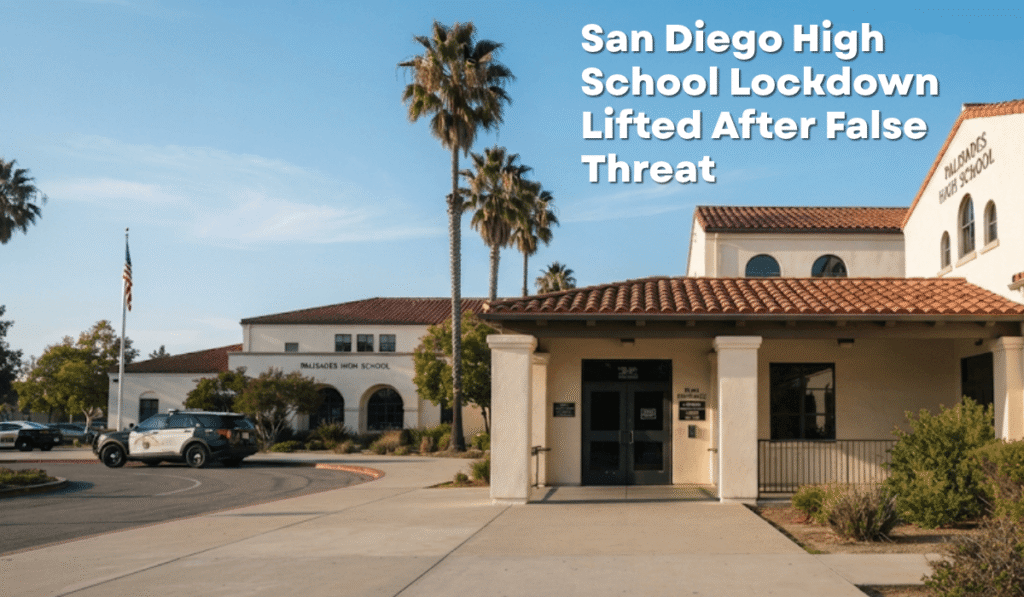
If you got a text from a worried friend, saw a post in a neighborhood group, or searched “San Diego High School lockdown today” with your heart in your throat, here’s the most important part first: the lockdown has been lifted, and the threat that caused it turned out to be false.
San Diego Unified School District confirmed that San Diego High School was placed on lockdown on Tuesday, November 17, 2026, and FOX 5 San Diego later reported that the lockdown was cleared after the threat was found to be false. No one has been reported hurt.
That’s a relief. But for the parents who spent those minutes refreshing their phones, it probably doesn’t erase the fear. Below is what’s verified, what a lockdown actually means at San Diego Unified, why these false threats keep happening, and what you can do next time.
Key Takeaways
- San Diego High School was placed on lockdown, and the lockdown has been lifted. San Diego Unified confirmed the lockdown, and FOX 5 San Diego reported it was cleared after a false threat.
- No injuries have been reported. Nothing we found suggests anyone was hurt or that any danger was found on campus.
- This isn’t the first false threat at San Diego High this year. In February 2026, the school and Helix Charter High in La Mesa were locked down over threats police later called unfounded.
- False threats are a growing problem across San Diego County. Mt. Carmel High, O’Farrell Charter and Monte Vista High all had lockdowns over unfounded threats in 2026.
- During a lockdown, don’t rush to campus. Follow updates from San Diego Unified and the San Diego Police Department, and wait for reunification instructions.
- Be careful with “lockdown today” posts online. Several low-quality websites have published made-up details about this incident. Stick to the district, police, and established local news.
What Happened at San Diego High School?
Here’s what we can confirm.
San Diego High School, the large public high school in the East Village near Balboa Park, went into lockdown after a threat was reported. San Diego Unified School District confirmed the lockdown, and law enforcement responded to check the campus.
The lockdown was later lifted. In its report, FOX 5 San Diego described the threat as false. In plain language, that means officers looked into it and didn’t find a real danger to students or staff.
As of this writing, officials haven’t publicly said who made the threat or how it was sent. When that information comes out, it will most likely come from the San Diego Police Department or San Diego Unified School Police.
A word of caution about what you read online
Within hours, several websites with names that have nothing to do with news (some are literally “obituary” sites) published “San Diego High School lockdown today” articles packed with exact timestamps, “shooting threat” headlines, and details they don’t source to anyone. One of them even admits in its own text that it couldn’t confirm the incident.
These pages are built to catch search traffic, not to inform you. If a story doesn’t name an official source, treat its details as rumor.
Has This Happened at San Diego High Before?
Yes, and recently. On February 6, 2026, San Diego High School and Helix Charter High School in La Mesa were both locked down after threats came in from the same phone number in the late morning, 10News reported. Police said the timing and other similarities suggested the two threats were related. Both campuses were searched, the threats were called unfounded, and normal operations resumed by early afternoon.
It’s been a rough year for San Diego school threats more broadly:
| Date (2026) | School(s) | What happened |
|---|---|---|
| Feb. 6 | San Diego High, Helix Charter High | Threats from the same number. Both found unfounded. (10News) |
| Feb. 23 | O’Farrell Charter, Monte Vista High | Threats possibly tied to a multistate hoax series. Nothing found. (Times of San Diego) |
| Aug. 24 | Mt. Carmel High (Poway Unified) | SWAT swept the campus room by room. Threat deemed unfounded. (10News) |
| Nov. 17 | San Diego High | Lockdown lifted after a false threat. (FOX 5) |
In the February incidents, a San Diego County Sheriff’s sergeant told reporters that “all evidence indicates the threat was not valid,” and said detectives had found related incidents in California and Idaho using the same phone number and wording. That pattern of copy-and-paste threats hitting many schools at once is often called swatting.
Why Do Schools Lock Down for Threats That Turn Out to Be Fake?
It’s a fair question, especially when your kid comes home and says, “It was nothing.”
The honest answer is that nobody can tell a hoax from a real threat in the first few minutes. So schools and police treat every threat as real until they’ve proven otherwise. A lockdown buys time: students are behind locked doors while officers search the campus. If the threat is fake, the cost is a disrupted morning. If it’s real, that lockdown can save lives.
So when you hear “false threat,” that doesn’t mean the lockdown was an overreaction. It means the system worked the way it’s supposed to.
See also: San Diego Unified School District Calendar 2026-2027 | Printable PDF
Lockdown vs. Secure Campus: What’s the Difference?
You’ll hear a few different terms from San Diego Unified and other local districts, and they don’t mean the same thing.
- Lockdown: There may be a threat on or near campus. Students and staff lock doors, stay out of sight, and stay quiet. Nobody enters or leaves.
- Secure campus (sometimes called a “lockout”): The danger is outside, like police activity in the neighborhood. Outside doors are locked, but classes often continue inside.
- Shelter in place: Usually for hazards like air quality or a chemical spill. Everyone stays indoors.
When Helix was locked down in February, for example, the school’s website described it as “Secure Campus status,” with students and staff inside and doors locked.
What Should Parents Do During a San Diego Unified Lockdown?
This is the hardest part, because every instinct says go get your kid. But here’s what actually helps:
- Don’t drive to campus. Parents arriving at a school during a lockdown can block roads that police and emergency crews need, and you won’t be let in anyway.
- Don’t call or text your child repeatedly. A buzzing phone can be a distraction or a safety risk during a lockdown. A short “I love you, follow your teacher” is plenty.
- Watch official channels. San Diego Unified’s website and social accounts, your school’s messages, and the San Diego Police Department’s posts on X are where real updates come from.
- Wait for reunification instructions. If students need to be picked up somewhere other than school, the district will tell you exactly where and what to bring (usually a photo ID).
- Don’t share unverified posts. Rumors spread fast in parent groups. Forwarding a screenshot without a source can cause panic for hundreds of other families.
If you haven’t signed up for your school’s text and email alerts, this is a good week to do it.
Talking to Your Teen After a Lockdown
High schoolers may act like it was no big deal, but a lockdown can stay with kids longer than they let on. A few ideas:
- Ask open questions. “What was it like in your classroom?” works better than “Are you okay?”
- Tell them the truth. It was a false threat, police checked, and the school is safe.
- Watch for signs of stress over the next few days, like trouble sleeping or not wanting to go to school. Your school counselor can help.
- Remind them not to repost threats, even “as a joke” or to “warn people.” The FBI says hoax threats are a federal crime and encourages students to #ThinkBeforeYouPost.
FAQs
Is San Diego High School on lockdown right now?
No. The lockdown at San Diego High School was lifted after the threat was determined to be false, according to FOX 5 San Diego. For the latest status, check San Diego Unified’s official channels.
Why was San Diego High School on lockdown?
The school was locked down after a threat was reported. Law enforcement checked the campus and the threat turned out to be false. Officials have not publicly said who made the threat or how it was sent.
Was anyone hurt in the San Diego High School lockdown?
No injuries have been reported.
Is there school at San Diego High tomorrow?
We have seen no announcement of a closure. Unless San Diego Unified says otherwise, plan on a normal school day, and check your school messages in the morning.
What happens to someone who makes a false school threat?
Making a false threat against a school can lead to criminal charges under California law, and it can become a federal crime when it’s sent across state lines. In San Diego Unified, students can also face school discipline.
How do I get San Diego Unified lockdown alerts?
Make sure your contact information is up to date with your school so you receive the district’s text, email, and phone alerts. You can also follow San Diego Unified and the San Diego Police Department on social media.
What’s the difference between a lockdown and a secure campus?
A lockdown means a possible threat on or near campus, so everyone hides behind locked doors. A secure campus means the danger is outside the school, so outside doors are locked but classes may continue inside.
The Bottom Line
San Diego High School students are safe, the lockdown is over, and the threat behind it was false. That’s the best possible outcome of a scary day. Still, this is at least the second false threat at San Diego High this year, and one of several across San Diego County, so it’s worth having a plan: know your school’s alert system, stay off the road to campus during a lockdown, and trust official sources over viral posts.
If you see a threat against a school online, don’t share it. Report it to your school, the San Diego Police Department, or the FBI at tips.fbi.gov. If there’s immediate danger, call 911.
This post reflects information available as of the evening of November 17, 2026. We’ll update it if San Diego Unified or the San Diego Police Department release more details.

The PublicSchoolsCalendar.com Team compiles and verifies public school calendar data for districts across all 50 US states, drawing on official district websites and published family calendars to keep every page accurate and up to date.