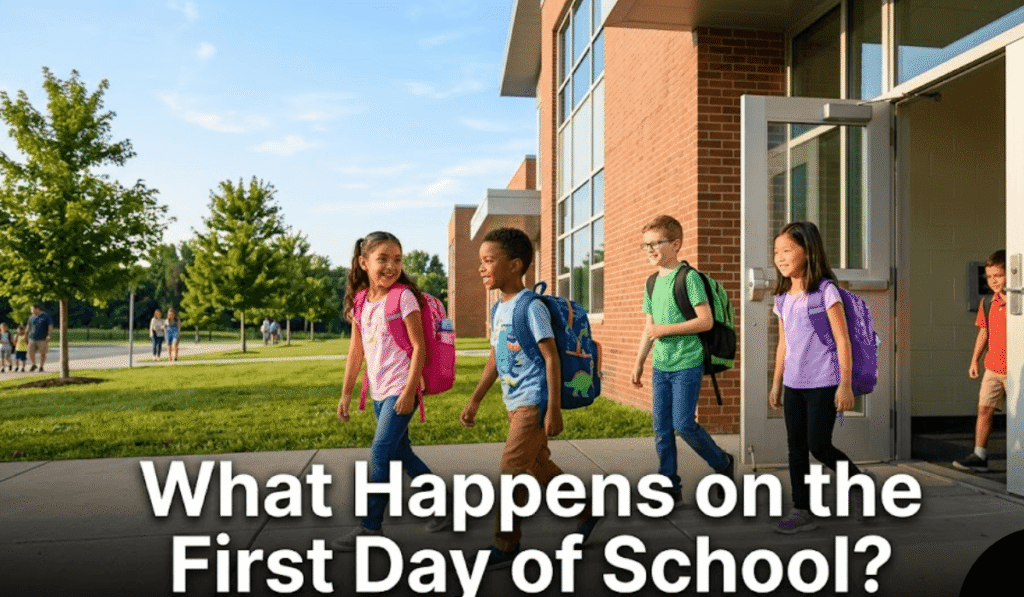
The first day of school is one of those dates that lands differently for everyone in the family. For kids, it’s a cocktail of excitement and nerves. For parents, it’s equal parts pride and quiet panic — did I pack the right lunch? Did I label everything? Is that backpack too heavy? For teachers, it’s the culmination of weeks of classroom prep finally meeting the reality of 25 real children walking through the door.
Whatever your role, knowing what to expect on that first day makes the whole experience smoother. So here is an honest, detailed breakdown of what actually happens — from the morning routine to the final bell.
The Night Before: Preparation That Pays Off
Most first-day stress is really a night-before problem. According to the American Academy of Pediatrics, school-age children need between 9 and 12 hours of sleep per night for optimal health and learning. That means for a child catching a 7:30am bus, lights out by 8:30pm is not early — it’s necessary.
The smartest thing any family can do the evening before is front-load as much decision-making as possible. Pack the backpack completely. Lay out the outfit. Prepare the lunch. Know the bus stop time or the school drop-off lane procedure. None of this sounds complicated, but in the actual chaos of a first morning, having these things already done is the difference between a calm send-off and a frantic one.
For new students especially — those entering kindergarten, moving up to middle school, or transferring to a new district — a school visit or orientation before the first day helps significantly. Many districts offer these. If yours does, take advantage of it. Walking the hallways, finding the cafeteria, and locating the bathrooms before Day One removes a layer of anxiety that kids cannot always articulate but absolutely feel.
Morning Drop-Off: What to Expect at the School
Arrive early. This is not negotiable on the first day. Drop-off lanes at elementary schools on the first day of school are uniquely chaotic — parents lingering, kids tearful, new routines not yet established. Most schools staff their parking lots and main entrances with extra teachers and administrators specifically to manage the first-day volume.
For kindergartners and younger elementary students, many schools allow parents to walk their child to the classroom on the first day. This is typically a first-day-only courtesy — after that, students are expected to enter independently. Check your school’s specific policy in advance. Some schools communicate this through the summer welcome packet; others post it on their website or send a robocall the week before school starts.
Middle and high school drop-off is typically more independent from Day One. Students are expected to know — or find — their homeroom or first-period class using a schedule they received in advance or will pick up at the front office upon arrival.
What Happens in the Classroom: Hour by Hour
Elementary School (K–5)
The first day at the elementary level is almost entirely about orientation, comfort, and community-building — not academics.
Teachers spend the morning welcoming students, assigning seats, learning names, and establishing the basic rules and expectations of the classroom. Most experienced elementary teachers open with a community-building activity — something low-stakes and engaging that gets kids talking and relaxed. Expect activities like “two truths and a lie,” a get-to-know-you worksheet, or a read-aloud of a first-day-themed picture book.
The first day typically includes a classroom tour, introduction to bathroom procedures and hall passes, a walkthrough of the school’s daily schedule, and often a visit to key locations like the library, gym, or cafeteria. Academic instruction — actual lessons — rarely begins in full on Day One. The goal is establishing trust and routine first.
Lunch on the first day can be stressful for younger students. Many schools station additional staff in the cafeteria on Day One to help kids find their class, navigate the lunch line, and understand where to sit. If your child is a picky eater or anxious about the cafeteria, sending lunch from home on Day One — even if they usually buy — removes one variable.
See also: 2026-2027 School Calendars
Middle School (Grades 6–8)
Middle school is where the first day gets structurally more complex. Students now navigate multiple classrooms, multiple teachers, and a period schedule — often for the first time in their academic life.
Most middle schools run an abbreviated schedule on the first day — shorter periods that rotate through each class so students can meet every teacher and locate every room. Expect syllabus handouts, introduction to grading expectations, a review of classroom rules, and icebreaker activities. Lockers are often assigned and demonstrated on Day One, which adds both excitement and stress for sixth graders in particular.
The social dimension of middle school first days is significant. Friend groups from elementary school may have shifted. New students are navigating entirely unfamiliar social terrain. Research from the National Middle School Association consistently shows that belonging and peer connection are among the strongest predictors of middle school success — and that process starts on Day One.
High School (Grades 9–12)
For freshmen, the first day of high school carries the same nervous energy as the kindergarten first day — just with better vocabulary. For returning students, it’s largely about reconnecting with friends and settling into the new year’s schedule.
High school first days follow the full period schedule, with each teacher using their time to distribute course syllabi, outline expectations, discuss grading breakdowns, and introduce the curriculum. Actual instruction rarely begins on Day One — teachers know better than to launch into content before students have their supplies, their bearings, and their schedules confirmed.
Many high schools also conduct schedule change windows on or immediately after the first day for students who need to adjust course selections. If your student has a scheduling concern, Day One is the time to flag it with their guidance counselor.
See also: How to Plan a Family Vacation Around School Breaks (Without Conflicts)
What Teachers Are Actually Doing
From the teacher’s side, the first day is less about content delivery and almost entirely about two things: setting the tone and learning the room.
Experienced teachers know the first day establishes the behavioral and relational foundation for the entire year. A classroom where expectations are clear, students feel seen, and the teacher demonstrates both warmth and structure from Hour One is a classroom that runs better in March. Teachers who skip this foundation and rush into curriculum often find themselves managing behavioral issues for months afterward.
Most teachers arrive at school significantly earlier than students on the first day — classroom setup, seating charts, name tags, printed materials, and welcome messages on the board are all pre-planned. Behind the scenes, teachers have typically spent anywhere from several days to several weeks preparing their classroom environment before students ever walk in.
What to Expect at Pickup
Pick up on the first day tends to be emotional — in both directions. Some kids burst out the door buzzing with stories. Others are quiet and deflated, overwhelmed by sensory input and social effort. Both reactions are completely normal. The energy required for a first day — especially for introverted children or those with anxiety — is genuinely exhausting.
Resist the urge to front-load your child with questions the moment they get in the car. Many child development experts, including those at the Child Mind Institute, recommend letting kids decompress for 20 to 30 minutes before asking about their day. A simple “I’m really glad you’re home” lands better than a rapid-fire debrief.
Check the backpack that evening. First days generate a significant amount of paper — emergency contact forms, media release forms, lunch account information, school supply lists, the teacher’s contact information, and the year’s academic calendar. Set aside time to read through everything, sign what needs signing, and return forms by the deadline.
A Quick Note for Parents of First-Time Kindergartners
The kindergarten first day is its own category entirely. Many children cry. Some parents cry more than the children. Both are normal. If your child is distressed at drop-off, hand-off to the teacher confidently and leave — prolonged goodbyes intensify separation anxiety rather than ease it. Teachers handle this daily and are skilled at redirecting upset children within minutes of the parent leaving.
Most kindergarten teachers send a first-day note or photo home through the school’s communication app to reassure parents. If you don’t hear anything by mid-morning and you’re worried, a quick call to the front office is completely acceptable.
First Day Checklist at a Glance
The night before: Pack backpack, prepare lunch, set out clothes, confirm bus time or drop-off plan, early bedtime.
Morning of: Leave earlier than you think you need to, bring any required forms or fees, take the photo you’ll want in ten years.
At pickup: Let them decompress before asking questions, check the backpack for forms, note any communication from the teacher.
The first day of school is one morning out of 180. It sets a tone, but it doesn’t define the year. With a little preparation and realistic expectations, it can be one of the best days on the calendar — for kids and parents alike.
Frequently Asked Questions
Q1: What time does school typically start on the first day?
Start times vary by district and school level, but most US public elementary schools begin between 7:45am and 8:30am, while middle and high schools often start earlier — sometimes as early as 7:15am. Check your specific district’s calendar on PublicSchoolsCalendar.com or your school’s official website for confirmed bell times, as these are set at the district level and vary significantly by state.
Q2: Do students get homework on the first day of school?
Rarely at the elementary level — first days are almost entirely orientation-focused. At the middle and high school level, some teachers may assign light reading or ask students to return a signed syllabus form by Day Two. Heavy academic homework on Day One is uncommon and generally not considered best practice by most educators.
Q3: What should my child bring on the first day if the supply list hasn’t arrived yet?
A basic backpack with a notebook, a couple of pencils, and a labeled water bottle covers most first-day needs at any grade level. Most teachers do not begin using full supply lists on Day One and will often distribute or reference the full list during the first week.
Q4: What happens if my child misses the first day of school?
Missing Day One is not academically catastrophic — little formal instruction happens — but it does mean your child misses classroom orientation, seating assignments, introductions, and the social reconnection that makes the transition easier. If an absence is unavoidable, contact the school in advance, and ask the teacher to send home any materials distributed on Day One.
Q5: When is the first day of school in 2025–2026 for my district?
First day dates vary widely by state and district. In most Southern states, school typically resumes in late July or early August. Northern and Northeastern states generally start after Labor Day in early September. Midwest and Western states fall somewhere in between, typically late August. Find your exact district’s first day date by searching your school district on PublicSchoolsCalendar.com.

The PublicSchoolsCalendar.com Team compiles and verifies public school calendar data for districts across all 50 US states, drawing on official district websites and published family calendars to keep every page accurate and up to date.